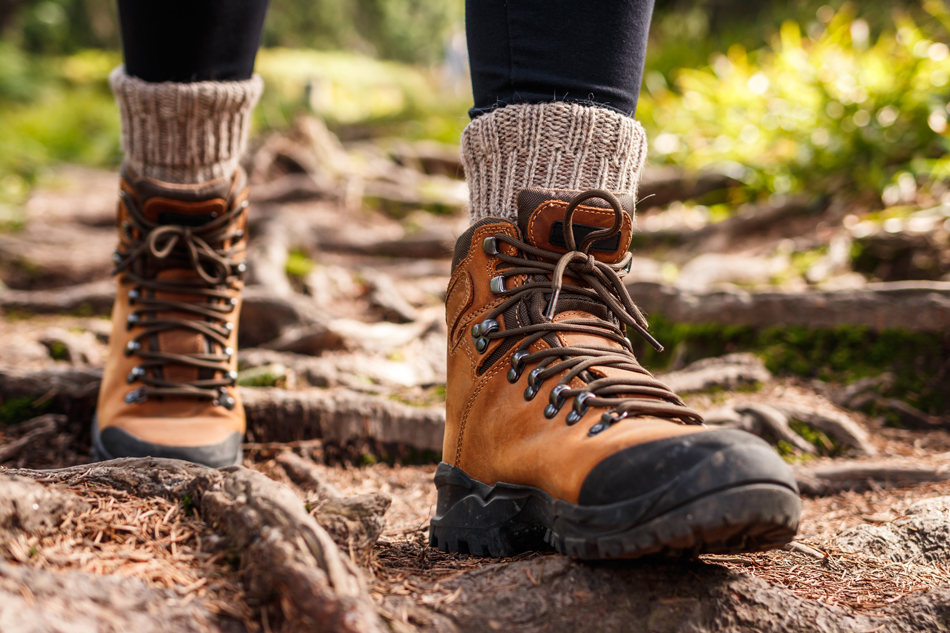
Whether you are tackling the steep incline of Y Mountain or planning a full-day ascent of Mount Timpanogos, the right footwear makes all the difference. Poorly fitting hiking boots are the leading cause of painful blisters and dangerous ankle sprains on the trail.
How do you choose the perfect hiking boot?
The ideal hiking boot must provide rigid ankle support, a snug (but not tight) fit in the heel, and plenty of room in the toe box to accommodate foot swelling.
Top Tips for Buying Hiking Boots:
- Shop in the Afternoon: Your feet naturally swell throughout the day. Shopping in the late afternoon or evening ensures you buy a boot that fits your foot at its largest.
- Test for Ankle Support: Squeeze the heel and ankle collar of the boot. It should feel stiff and resistant to bending. A mid-to-high cut boot is highly recommended for rocky Utah trails.
- Check the Toe Clearance: When you lace up the boot and stand, you should have a thumb’s width of space between your longest toe and the front of the boot. This prevents your toes from jamming into the front of the shoe during steep descents.
- Wear Your Hiking Socks: Always try boots on with the exact moisture-wicking wool or synthetic socks you plan to wear on the trail. Never hike in cotton!
Break Them In Before the Big Hike
Never take brand-new boots on a long hike. Wear them around your house, then on short neighborhood walks, and gradually work your way up to longer trails. If you continually suffer from blisters or ankle instability despite proper footwear, schedule an appointment with Hoyal Podiatry to discuss custom orthotics for enhanced stability.